
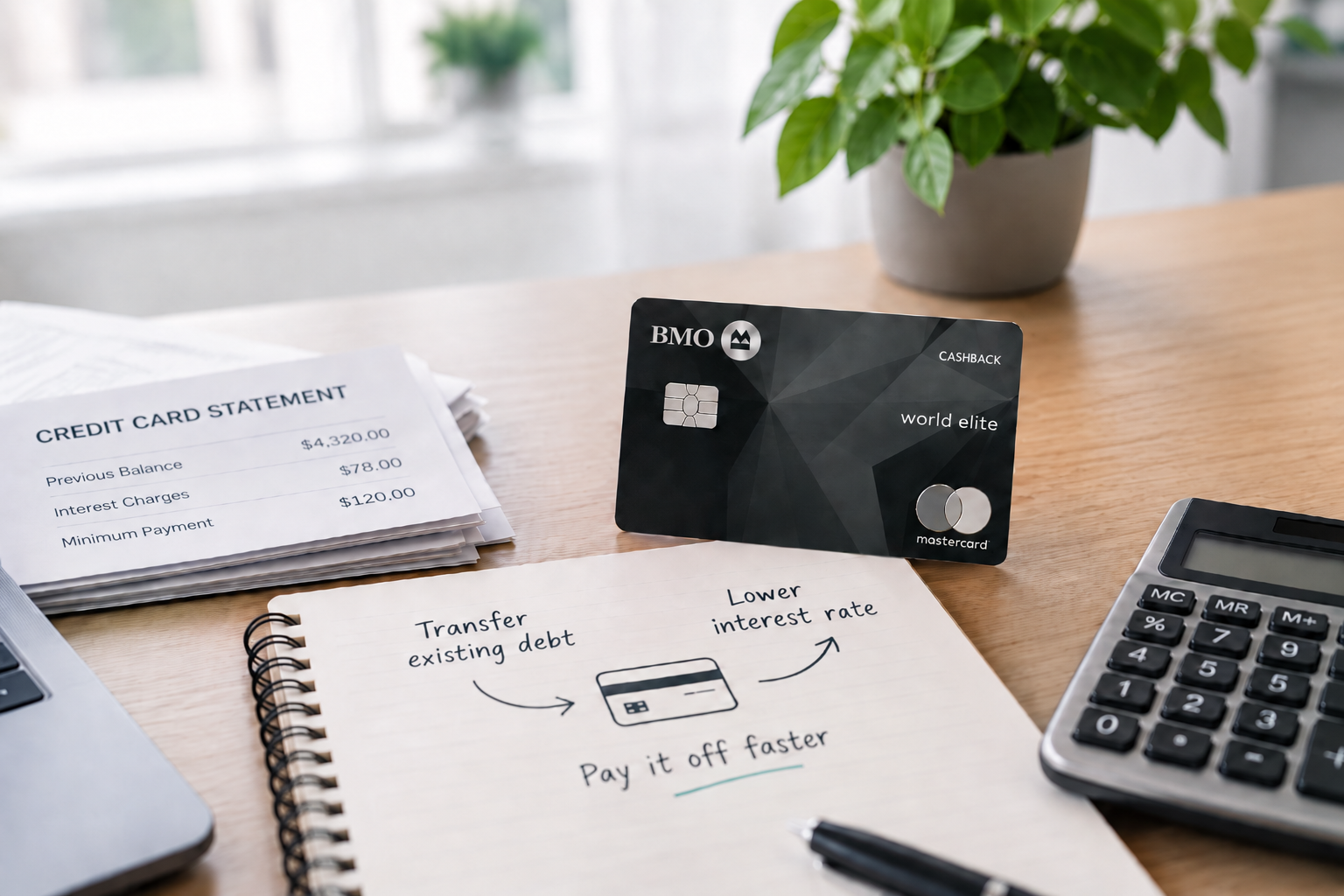
If you’re carrying high-interest credit card debt, a balance transfer card can buy you real breathing room — sometimes months of 0% interest to pay it down. Here’s how they work.
Short answer: A balance transfer credit card lets you move existing debt onto a new card at a low or 0% promotional rate, typically for 9 to 18 months, so you can pay down the principal without interest piling up. A transfer fee of 2% to 3% usually applies, and the card only helps if you have a plan to clear the balance before the promotional rate expires.Key points from this guide · last reviewed Sep 11, 2026
What Is a Balance Transfer Credit Card?
In simple terms: A balance transfer card lets you move debt from an existing high-interest card onto a new card offering a low or 0% promotional interest rate for a set period — giving you time to pay down the principal without interest piling up.
How Does It Work?
- Apply for a balance transfer card from a different issuer than your current debt.
- Request the transfer, specifying the amount and the account it’s coming from.
- Wait roughly 5–10 business days for the transfer to process.
- Pay down the balance during the promotional period, ideally before it ends.
Quick Tip: Promotional rates typically run 9–18 months depending on the card. Divide your balance by the number of promo months to figure out what you’d need to pay monthly to clear it interest-free.
What Does It Cost?
Most balance transfer cards charge a one-time transfer fee, often 2%–3% of the amount transferred, even during the 0% promotional period. That fee is still usually far cheaper than months of interest at a standard 20%+ rate.
What this means for you: A $5,000 transfer at a 3% fee costs $150 upfront — likely far less than the interest you’d pay carrying that balance on a regular card for the same period.
Balance Transfer Cards Available in Canada
Not every low-interest card actually offers a balance transfer promo, and the ones that do vary a lot in rate, length, and fees. Here are three cards on the Canadian market that currently advertise a real balance transfer offer, so you can see what these deals look like in practice:
| Card | Balance Transfer Rate | Promo Length | Transfer Fee | Annual Fee |
|---|---|---|---|---|
| MBNA True Line Mastercard | 0% | 12 months* | 3% | $0 |
| RBC Visa Classic Low Rate Option | 0.99% | 10 months | Not stated by RBC — confirm before transferring | $20/yr (waived year 1) |
| Scotiabank Value Visa Card | 0% | 9 months | 1% | $29/yr (waived year 1) |
*Must complete the transfer within 90 days of opening the MBNA account.
- MBNA True Line Mastercard: No annual fee at all, plus a fixed 12.99% purchase rate once the promo ends. The catch: the 0% offer can end early if you miss a payment, and the balance-transfer rate then jumps to 17.99%.
- RBC Visa Classic Low Rate Option: A 12.99% fixed rate applies to both purchases and balance transfers after the intro period, and the $20 annual fee is waived in year one. RBC doesn’t publish a specific balance-transfer fee on its card page, so confirm that detail directly with RBC before transferring.
- Scotiabank Value Visa Card: A straightforward 0% offer with a 1% transfer fee, capped at transfers up to $49,999.99. The $29 annual fee returns after the first year, and the ongoing rate afterward is 13.99%.
Worth knowing: The TD Low Rate Visa Card is sometimes grouped with these cards too, but its current promotional 0% rate applies to purchases, not balance transfers specifically — its ongoing 12.90% rate is still low, but it isn’t a dedicated balance-transfer offer the way the three above are.
Quick Tip: Card issuers change these promotions often — sometimes the rate, sometimes the length, sometimes both. Before you apply, click through to the card’s page (linked above) and confirm the current offer directly with the issuer.
What Happens After the Promo Ends?
Any balance still remaining after the promotional period reverts to the card’s regular interest rate, which can be just as high as a standard card. The strategy only pays off if you have a realistic plan to pay down most or all of the balance before that happens.
Key Takeaways
- A balance transfer card moves existing debt to a new card at a low or 0% promotional rate.
- Promotional periods typically run 9–18 months, and a transfer fee of 2%–3% usually applies.
- It only helps if you have a plan to pay down the balance before the promo rate expires.
The Bottom Line: A balance transfer card is a useful tool for tackling existing debt — not a long-term solution. Use the promotional window to actually pay the balance down, not just to pause the problem.
Frequently Asked Questions
How long do balance transfer promotional rates last? Typically 9 to 18 months, depending on the card and issuer.
Is there a fee to transfer a balance? Most cards charge a one-time fee, often 2%–3% of the transferred amount.
What happens if I don’t pay off the balance in time? Any remaining balance reverts to the card’s regular interest rate, which can be as high as a standard credit card.
Want to keep learning? Browse more beginner-friendly guides on MoneyMint, including our HISA guide.
This article is for general educational purposes and isn’t financial advice. Promotional rates, fees, and terms vary by card and change over time — always confirm current details directly with the card issuer.