
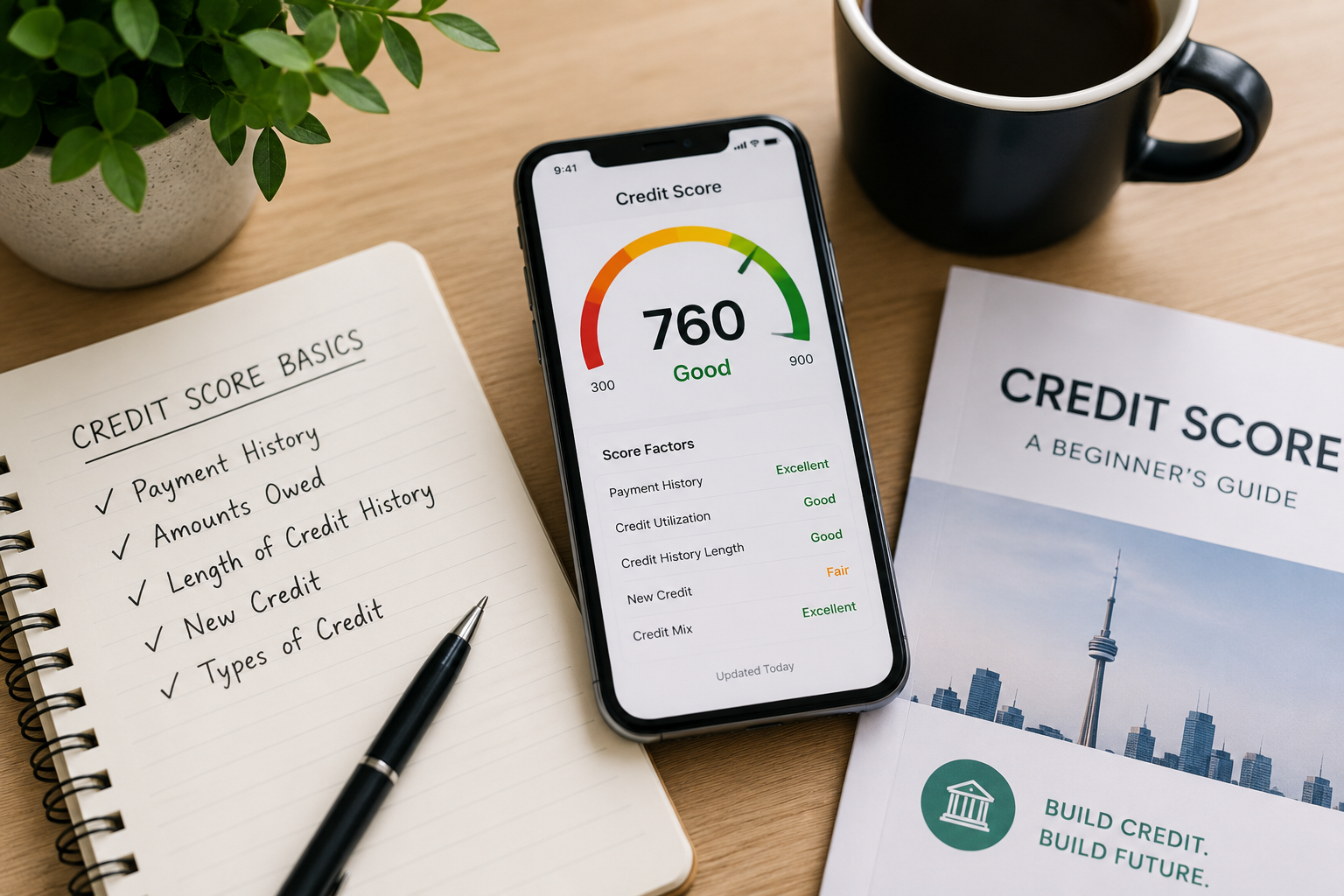
Your credit score follows you around quietly in the background — until you apply for a mortgage, a car loan, or even a new phone plan, and suddenly it’s the number everyone cares about. Here’s what it actually is, how it’s calculated, and what counts as “good” in Canada.
Short answer: A credit score is a three-digit number, from 300 to 900 in Canada, that estimates how likely you are to repay borrowed money; Equifax and TransUnion calculate it. A score of 660 or higher is generally considered good and 760 or higher excellent. Payment history and credit utilization are the two biggest factors, and checking your own score is a soft inquiry that never hurts it.Key points from this guide · last reviewed Sep 11, 2026
What Is a Credit Score?
In simple terms: A credit score is a three-digit number that estimates how likely you are to repay borrowed money, based on your credit history. In Canada, scores range from 300 to 900 — the higher the number, the better.
Who calculates it: Canada has two major credit bureaus, Equifax and TransUnion, and each can produce a slightly different score for you based on the information they have on file.
Why Does Your Credit Score Matter?
Lenders, landlords, and even some employers use it to gauge risk before doing business with you.
- It affects loan approval. A low score can mean getting turned down for a mortgage, car loan, or credit card.
- It affects the interest rate you’re offered. Higher scores typically unlock lower interest rates, which can save thousands of dollars over the life of a loan.
- It can affect renting an apartment or getting approved for a cell phone contract without a deposit.
In simple terms: A good credit score doesn’t just get you approved — it can make borrowing meaningfully cheaper.
What Counts as a Good Credit Score in Canada?
Most lenders group scores into similar bands, though exact cutoffs can vary slightly by lender.
| Score Range | Rating |
|---|---|
| 300–559 | Poor |
| 560–659 | Fair |
| 660–724 | Good |
| 725–759 | Very Good |
| 760–900 | Excellent |
Quick Tip: A score of 660 or higher is generally considered “good” enough to qualify for most mainstream credit products. The average Canadian credit score is close to the “very good” range, so anything above roughly 760 puts you ahead of the typical borrower.
What Factors Affect Your Credit Score?
Credit scoring models weigh several pieces of your credit history. The most important ones are:
- Payment history — paying your bills on time is the single biggest factor. Missed or late payments can hurt your score significantly.
- Credit utilization — how much of your available credit you’re using. Keeping your balances below about 30% of your credit limit is a common rule of thumb.
- Length of credit history — longer-established accounts generally help your score.
- Credit mix — having a mix of credit types (credit cards, car loans, a mortgage) can be viewed positively.
- New credit applications — applying for several new credit products in a short window can temporarily lower your score.
- Negative marks — collections, consumer proposals, or bankruptcies have a significant negative impact and can stay on your report for years.
What this means for you: If you only focus on one thing, focus on paying bills on time and keeping your balances low relative to your limits — those two factors carry the most weight.
Does Checking My Own Credit Score Hurt It?
No. Checking your own score is called a “soft inquiry” and has no effect on your credit score, no matter how often you do it.
- Soft inquiries (checking your own score, or pre-approval checks from lenders) don’t affect your score.
- Hard inquiries (when you formally apply for credit and a lender pulls your report) can cause a small, temporary dip.
Quick Tip: You can check your credit score for free directly through Equifax Canada or TransUnion Canada, and many banks now offer free score-checking tools built into their apps.
How Can You Improve Your Credit Score?
- Pay every bill on time, even if it’s just the minimum payment — payment history matters most.
- Keep credit card balances low relative to your limit, ideally under 30%.
- Avoid applying for multiple new credit products in a short period.
- Keep old accounts open if they don’t carry annual fees, since a longer credit history helps.
- Check your credit report regularly for errors — mistakes on your report can drag your score down unfairly, and you have the right to dispute them.
Key Takeaways
- Canadian credit scores range from 300 to 900, calculated by Equifax and TransUnion.
- A score of 660 or higher is generally considered “good,” with 760+ considered “excellent.”
- Payment history and credit utilization are the two biggest factors in your score.
- Checking your own score is a soft inquiry and never hurts your score.
- Paying on time, keeping balances low, and limiting new credit applications are the most effective ways to improve your score over time.
The Bottom Line: Your credit score isn’t fixed — it responds to your habits over time. Consistent on-time payments and low balances relative to your credit limits are the two changes most likely to move the number in the right direction.
Frequently Asked Questions About Credit Scores
What is a good credit score in Canada? A score of 660 or higher is generally considered good, with scores above 760 considered excellent by most lenders.
What is the credit score range in Canada? Canadian credit scores range from 300 to 900.
Does checking my credit score lower it? No. Checking your own score is a soft inquiry and has no impact. Only hard inquiries from formal credit applications can cause a small, temporary dip.
What affects my credit score the most? Payment history and credit utilization (how much of your available credit you’re using) are typically the two most heavily weighted factors.
Want to keep learning? Browse more beginner-friendly personal finance guides on MoneyMint.
This article is for general educational purposes and isn’t financial advice. Credit scoring models and ranges can vary between bureaus and lenders — check directly with Equifax Canada or TransUnion Canada for your personal score and report.